
Few topics in health and longevity have generated as much attention as quickly as peptides.
For anyone approaching peptides for beginners, the challenge is not a lack of information. It is a lack of reliable, grounded information that does not overclaim, oversimplify, and does not leave you more confused than when you started.
Peptides are short chains of amino acids, the same molecular units from which proteins are built.
The distinction between a peptide and a protein is primarily one of length: peptides typically contain between two and around fifty amino acids, while proteins are longer, more structurally complex chains that fold into specific three-dimensional forms.
The body produces peptides continuously and in extraordinary variety. They function as the biological communication system through which cells, tissues, and organ systems coordinate fundamental processes: repair, growth, immune response, hormonal regulation, inflammation management, and metabolic control.
Peptides are not foreign to the body. They are part of its existing operating system.
What makes Peptide Therapy a relevant subject is the relationship between peptide production and the ageing process.
Many of the body’s natural peptide signals decline with age, under chronic stress, and in response to physiological strain.
The biological consequences of this decline, slower repair, reduced recovery, altered hormonal balance, and diminished regulatory precision, are precisely the areas that therapeutic peptide research is most actively exploring.
One of the most important things to know when approaching peptides for beginners is that therapeutic peptide use is not new. It has been part of medicine for over a hundred years, with an evidence base that extends well beyond the research-stage compounds generating excitement today.
Insulin, discovered in 1921 by Dr. Frederick Banting and Charles Best, was the first therapeutic peptide. It transformed type 1 diabetes from a fatal diagnosis into a manageable condition and demonstrated, for the first time in medical history, that a biologically identical peptide could be used safely and effectively as a clinical intervention.
Insulin has been in continuous worldwide use for over a century, producing the longest and most comprehensive safety and efficacy record of any therapeutic compound in modern medicine.
The more recent history of Peptide Therapy has been significantly shaped by GLP-1 receptor agonists, compounds such as semaglutide developed for type 2 diabetes management.
Their documented effects on body composition and metabolic health brought peptide medicine into mainstream awareness and demonstrated at scale that Peptide Therapy can be both safe and transformational when appropriately designed and monitored.
GLP-1 receptor agonists are peptides, and their success has opened a broader conversation about what the field can offer.
A consistent observation in peptides for beginners discussions is that peptides tend to be well-tolerated compared to many conventional pharmaceutical compounds. This is not coincidental. It reflects something fundamental about their biological nature.
Therapeutic peptides are bioidentical to molecules the body already produces. When a research peptide binds to a receptor, it uses the same pathway and the same signalling mechanism that the body’s own endogenous peptide would use.
The body does not encounter a structurally foreign compound requiring adaptation. It encounters a signal it already recognises, delivered through familiar biological channels.
Peptides are also naturally biodegradable. After delivering a biological signal, they are broken down by the body’s normal metabolic processes into their constituent amino acids, which are recycled into other biological functions. No accumulation of synthetic compounds, no toxic residue, and no permanent structural change to the body’s own signalling architecture.
This is why Peptide Therapy aligns so naturally with regenerative and preventative medicine. Peptides work within the body’s existing regulatory framework, amplifying and restoring what the body already does.
One of the most practically important things to understand in peptides for beginners is that how a peptide is delivered matters as much as which peptide is used.
The route of administration determines where the peptide is most active in the body and what the relevant research evidence actually is.
The most established delivery method for most research peptides. Subcutaneous injection delivers the compound into systemic circulation, from where it can reach tissues throughout the body.
The majority of published peptide research on musculoskeletal repair, wound healing, growth hormone stimulation, and systemic regenerative effects has been conducted using this route.
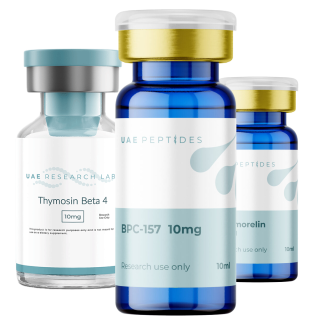
Examples include BPC-157 for tissue repair, CJC-1295 and Ipamorelin for growth hormone stimulation, and Epitalon for telomerase activation.
Nasal delivery is most relevant for peptides targeting the brain and nervous system. The nasal route provides a more direct pathway to the central nervous system than systemic injection for certain compounds.
Semax and Selank are the most studied peptides in this format, researched respectively for their nootropic and neuroprotective properties and their anxiolytic and mood-stabilising effects.
Oral delivery is viable only for peptides with sufficient gastric stability to survive the digestive environment.
Most peptides are broken down by stomach acid and digestive enzymes before they can be absorbed.
BPC-157 is the most notable exception, described in the literature as a stable gastric pentadecapeptide that maintains its integrity in human gastric juice for more than 24 hours.
Oral BPC-157 is most mechanistically appropriate when the gastrointestinal tract is the primary target. KPV is another peptide studied in oral form for its gut-protective and anti-inflammatory properties.
Topical formulations are applied directly to the skin for localised effects.
GHK-Cu is the most extensively researched peptide in this format, with documented effects on collagen synthesis, wound healing, and skin tissue repair.
Topical delivery is appropriate when the target is the skin or superficial tissue at or near the application site.
A balanced view of peptides for beginners requires being honest about where the science currently stands.
The research underpinning Peptide Therapy is genuine, growing, and in many cases spans several decades. It is also largely preclinical research.
With the exception of approved therapeutic compounds such as insulin and GLP-1 receptor agonists, most research peptides have not yet completed the large-scale, long-term human safety and efficacy trials that would qualify them as approved pharmaceutical agents.
Human data exists for many, and it is often encouraging. Comprehensive clinical evidence takes time to accumulate, and the research community continues to call for larger and more rigorous trials across most compounds.
This does not diminish the significance of what the existing literature shows. It contextualises it.
For those exploring peptides for beginners, understanding which research areas are most active helps contextualise the compounds that come up most frequently in the field.
The final and arguably most important thing to understand in peptides for beginners is that the right peptide protocol is very individualised.
The compound, the dose, the delivery format, the cycle structure, and the duration all need to be matched to the specific individual’s health profile, goals, existing biology, and any relevant contraindications.
Immune status, gut health, current medications, existing health conditions, and prior experience with peptides all influence what is appropriate and what is not.
A protocol sourced from an online forum or a generic dosing guide treats every individual as interchangeable.
When outcomes are poor or side effects arise, experienced practitioners in the peptide field explain how the compound itself is just one piece, but the individual’s biology, the dose, the peptide source, the protocol design, and whether a proper suitability assessment was carried out beforehand all shape what happens.
A peptide protocol is only as reliable as the decisions made around it.
Understanding what peptides for beginners involves at a conceptual level is valuable.
Translating that into something safe, specific, and appropriate for your individual biology and goals is the work that comes next, and it is work that benefits from genuine expertise.
Schedule a personalised consultation with our Peptide Therapy experts who can help you understand which compounds are most relevant to your goals, what the evidence supports, and how to approach Peptide Therapy in a way that is grounded in science and matched to your individual situation.
A peptide is a short chain of amino acids that the body uses as a biological signalling molecule. Peptides coordinate processes including repair, growth, hormonal regulation, immune response, and inflammation control. They are produced naturally by the body and decline with age, which is the basis for therapeutic interest in restoring or supplementing specific peptide signals.
Peptides and proteins are related but distinct. Both are made from amino acids, but peptides are shorter chains, typically two to fifty amino acids, while proteins are longer, structurally more complex, and fold into specific three-dimensional shapes. Peptides generally function as signalling molecules, while proteins tend to serve structural or enzymatic roles.
Yes, in the most fundamental sense. Peptides are molecules the body produces naturally and continuously. They are part of the body’s existing biological architecture, functioning as signalling molecules that coordinate repair, growth, hormonal regulation, and immune response. Therapeutic peptides are either synthetic versions of peptides the body already makes, or novel sequences designed to interact with the same biological pathways. Either way, the body recognises peptide signalling because it has been using it since before birth.
This depends on what the goal is and which tissue or system is being targeted. Different peptides have different mechanisms, different delivery formats, and different evidence bases. Matching the right compound to the right goal requires understanding both the peptide’s biology and the individual’s health context. A consultation with a Peptide Therapy specialist is the most reliable way to make this determination.
The route of administration determines where in the body a peptide is most active. Subcutaneous injection delivers the compound to systemic circulation, reaching tissues throughout the body. Nasal delivery targets the central nervous system more directly. Oral delivery is only viable for peptides with gastric stability and is most appropriate when the gastrointestinal tract is the target. Topical delivery is relevant for localised skin and tissue effects. Using the wrong format for a given goal means the protocol is not aligned with the relevant evidence.
Peptide Therapy and hormone therapy are related but distinct. Some peptides are hormones, such as insulin. Others stimulate the body to produce its own hormones, such as growth hormone secretagogues. Still others have no direct hormonal action. The defining feature of Peptide Therapy is that it works through the body’s existing signalling pathways rather than introducing synthetic hormones directly.
That individual assessment matters more than any generic protocol. The right compound, dose, format, and cycle for one person may not be right for another. The science behind peptides for beginners is genuinely compelling, but it is most safely and effectively applied when guided by someone with real clinical experience in the field.
Written by Elizabeth Sogeke, BSc Genetics, MPH
Elizabeth is a science and medical writer specialising in peptide science, longevity medicine, mitochondrial health, metabolic optimisation and regenerative health research. With a BSc in Genetics and a Master’s in Public Health, she combines a strong scientific foundation with experience translating complex biomedical research into clear, clinically informed education for the Peptide Therapy and longevity medicine space. Her work is centred on interpreting emerging peptide, metabolic and longevity research with scientific accuracy, clinical awareness and a clear understanding of how these therapies are being discussed and applied in modern health optimisation.
Discount Applied Successfully!
Your savings have been added to the cart.

20% OFF sitewide across
UAE Peptides for a limited time
Use the promocode: SITEWIDE20