
Peptides are often discussed as though they belong to a new scientific movement. The recent growth in public interest can certainly make the field appear modern, but the science itself has been developing for approximately 120 years.
There was no single moment when “peptide science” suddenly appeared. Instead, the field was built by answering a series of increasingly sophisticated questions.
Could organs communicate using chemicals rather than nerves? Could a biological messenger be isolated and used as a medicine? Did every peptide possess a fixed molecular sequence?
Each answer created the foundation for the next stage of research.
At the beginning of the twentieth century, scientists already understood that the nervous system helped coordinate the body.
What remained uncertain was whether organs could also communicate by releasing substances into the circulation.
William Bayliss and Ernest Starling provided an important answer in 1902.
Their experiments showed that when acid entered the small intestine, the intestinal lining released a substance into the bloodstream.
That substance, which they named secretin, then stimulated the pancreas to release bicarbonate-rich digestive fluid.
The importance of the experiment extended far beyond digestion. It demonstrated that one part of the body could regulate another through a circulating chemical signal.
In 1905, Starling introduced the term “hormone” for this type of messenger. Secretin is consequently often described as the first hormone to be discovered, and the work of Bayliss and Starling became an important foundation for modern endocrinology.
Peptide research therefore began not with a laboratory-made compound, but with a new understanding of how the body communicates.
The next major advance came from insulin.
In 1921, Frederick Banting and Charles Best began testing pancreatic extracts at the University of Toronto.
Their experiments showed that these extracts could reduce blood glucose in animals with experimentally induced diabetes.
The achievement was a collaborative one. J. J. R. Macleod provided laboratory resources, direction and physiological expertise, while biochemist James Collip developed purification methods that helped make the extract suitable for clinical administration.
In January 1922, 14-year-old Leonard Thompson received insulin during the first successful clinical treatment. A condition that had previously been almost inevitably fatal could now be managed.
The 1923 Nobel Prize in Physiology or Medicine was awarded to Banting and Macleod. Banting shared his prize money with Best, and Macleod shared his with Collip, acknowledging the contributions of the wider Toronto team.
Insulin changed medicine, but it also changed the direction of peptide research. It showed that a naturally occurring biological messenger could be isolated, prepared and used therapeutically on a large scale.
Early researchers could observe what insulin did, but they did not yet know the exact order of its amino acids.
That changed through the work of Frederick Sanger.
During the 1940s and 1950s, Sanger developed methods for breaking insulin into smaller fragments and identifying how those fragments fitted together.
In 1955, he established the complete amino-acid sequence of insulin, the first complete sequence determined for a protein.
This finding answered a fundamental scientific question. Proteins and peptides were not vague or irregular biological materials. They contained defined amino-acid sequences that could be identified, recorded and compared.
Sanger received the Nobel Prize in Chemistry in 1958 for his work on the structure of proteins, particularly insulin.
At approximately the same time, Vincent du Vigneaud was investigating oxytocin, a peptide hormone containing nine amino acids.
Du Vigneaud and his colleagues established oxytocin’s structure and then recreated it chemically. Its sequence was reported in 1953, and the complete synthesis was described in 1954.
This was the first total chemical synthesis of a peptide hormone. It proved that scientists could do more than identify peptides in biological material: they could assemble an active peptide from its individual amino-acid components.
Du Vigneaud received the Nobel Prize in Chemistry in 1955 for work that included the first synthesis of a polypeptide hormone.
Together, the insulin sequence and oxytocin synthesis transformed peptides into molecules that could be read, mapped and deliberately reconstructed.
The synthesis of oxytocin was a landmark achievement, but the process used to create it was demanding.
Traditional solution-phase synthesis required amino acids to be joined through a series of separate reactions. After each stage, the intermediate product generally had to be isolated and purified before the following amino acid could be attached.
The process became increasingly difficult as peptide chains grew longer.
Robert Bruce Merrifield introduced a different approach in 1963.
In solid-phase peptide synthesis, or SPPS, the first amino acid is attached to an insoluble resin.
The peptide chain remains connected to that resin while additional amino acids are introduced one after another.
Instead of isolating the developing peptide after every reaction, researchers can wash away excess reagents and unwanted reaction products while the desired chain remains attached to the solid support.
This made repeated peptide assembly easier to control and helped enable automated synthesising equipment.
Merrifield received the Nobel Prize in Chemistry in 1984 for developing chemical synthesis on a solid matrix.
SPPS did not eliminate every difficulty. Some sequences remain challenging because they aggregate, react inefficiently or form unwanted structures.
Final quality also depends on purification and analytical testing rather than synthesis alone.
Nevertheless, SPPS fundamentally changed what peptide chemists could attempt.
Peptide synthesis creates a chemical problem: amino acids contain several reactive groups, but only selected groups should react during each stage of assembly.
Chemists address this using protecting groups. These temporarily block parts of an amino acid until the appropriate point in the synthesis.
In 1970, Louis Carpino and Grace Han introduced the Fmoc protecting group. Fmoc was later incorporated into solid-phase synthesis strategies during the 1970s.
Fmoc can be removed using relatively mild basic conditions, while many other protections remain attached until a later acidic treatment. This separation of reaction conditions gives chemists greater control over when different parts of the molecule become chemically available.
Fmoc-based SPPS subsequently became one of the most widely used approaches to chemical peptide production. It remains important today, although the finished peptide must still be purified and tested for identity, purity and related impurities.
The significance of SPPS and Fmoc chemistry was not that they guaranteed a perfect peptide.
Their importance was that they made the construction of many defined sequences far more practical.
Chemical synthesis is highly useful for shorter peptides and for sequences containing deliberate modifications. Larger peptides and proteins, however, may be difficult or expensive to assemble chemically.
Recombinant DNA technology offered another route.
Scientists could place the DNA instructions for a human protein or peptide into a host cell, commonly a bacterium or yeast. The host cell would then use that genetic information to manufacture the target molecule.
The defining early example was recombinant human insulin.
On 28 October 1982, the US Food and Drug Administration approved Humulin. It was the first biosynthetic human insulin and the first approved medical product produced using recombinant DNA technology.
This provided an alternative to obtaining insulin from animal pancreases. Animal-derived insulin did not disappear immediately, but recombinant production eventually became the dominant approach in many markets.
Recombinant technology also expanded beyond insulin to support the manufacture of numerous peptide and protein medicines.
Chemical synthesis and recombinant production should not be viewed as competing versions of the same process.
Each has different strengths. The most suitable method depends on factors such as molecular size, sequence, required modifications, production volume and manufacturing complexity.
By the 1990s, researchers were not only asking how to produce peptides. They were also investigating whether peptides could be used to locate particular types of tissue.
Certain cells display receptors that recognise particular peptide signals. Scientists realised that a peptide analogue could potentially act as a molecular address, carrying an imaging or therapeutic component towards cells expressing the relevant receptor.
Somatostatin analogues became an important example.
Researchers developed radiolabelled forms of octreotide, a synthetic somatostatin analogue, to identify tumours expressing somatostatin receptors.
Early clinical tumour-imaging work was reported around 1990, and somatostatin receptor imaging later became established in the assessment of certain neuroendocrine tumours.
Related peptides were subsequently paired with therapeutic radioisotopes, allowing the targeting component to deliver radiation to receptor-positive tissue.
This approach helped establish what is now called theranostics: using closely related molecular targeting systems for both diagnostic imaging and treatment.
Peptides are not uniquely capable of precise targeting.
Antibodies and some small-molecule drugs can also be highly selective. The wider lesson was that a peptide’s receptor affinity could be used as part of a targeted research or clinical strategy.
Many endogenous peptides are intended to act briefly.
Once released, they may be rapidly broken down by enzymes, filtered by the kidneys or cleared through other biological processes. This is appropriate for moment-to-moment signalling but can create difficulties when researchers want sustained activity.
Peptide engineering developed several ways to address this problem.
One approach is PEGylation, in which polyethylene glycol is attached to a peptide or protein. Depending on the molecule, this can increase its effective size, reduce renal clearance and alter susceptibility to enzymatic degradation.
PEGylation research began in the 1970s rather than the 2000s. The first FDA-approved PEGylated therapeutic, pegademase bovine, was approved in 1990.
Another approach is lipidation, which attaches a fatty-acid or lipid structure to the molecule. In some engineered peptides, the lipid promotes reversible binding to albumin, a protein circulating in the blood.
Albumin association can slow clearance and extend exposure.
Additional strategies include:
These techniques allow researchers to change how a peptide behaves without necessarily abandoning its original biological target.
The development of GLP-1 receptor agonists provides a clear example of peptide engineering in practice.
Natural GLP-1 helps regulate glucose-dependent insulin secretion, glucagon release, gastric emptying, appetite and food intake.
However, active endogenous GLP-1 is degraded rapidly, limiting how long its signal persists.
Researchers developed molecules that activated the same receptor while remaining intact for longer.
Exenatide became the first FDA-approved GLP-1 receptor agonist in 2005.
Later compounds used strategies such as amino-acid substitution, lipidation and albumin association to support daily or weekly activity.
The central achievement was not simply making GLP-1 “stronger”. It was retaining useful receptor activity while changing the molecule’s resistance to degradation and speed of clearance.
This principle now extends across peptide engineering: natural biology provides the starting mechanism, while chemistry determines whether that mechanism can be studied or applied over a different timescale.
The same advances that supported approved medicines also made it possible to investigate a much wider range of naturally occurring, synthetic and modified peptides.
GHK is a naturally occurring three-amino-acid peptide that binds copper to form GHK-Cu. It was first isolated from a human plasma albumin fraction in 1973.
Laboratory research has examined its relationship with extracellular matrix signalling, fibroblast activity, copper transport and tissue-response pathways.
The strength of evidence varies by outcome and formulation, and findings from cultured cells should not automatically be interpreted as demonstrated effects in humans.
GHK-Cu is an example of an endogenous peptide complex that can also be recreated synthetically for controlled laboratory investigation.
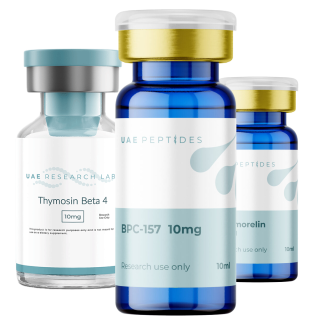
BPC-157 is a synthetic 15-amino-acid peptide associated in the supporting literature with a gastric-juice-derived “body protection compound”.
Published research has thoroughly investigated BPC-157 predominantly in laboratory and animal models.
These studies have explored gastrointestinal, vascular, tendon and other tissue-related pathways.
MOTS-c is a 16-amino-acid peptide encoded within mitochondrial DNA. It was first reported in 2015 in research examining metabolic regulation in cells and mice.
A later study found that acute exercise increased endogenous MOTS-c expression in skeletal muscle and temporarily raised circulating concentrations in a small group of healthy men.
It is therefore reasonable to describe MOTS-c as exercise-responsive.
The long history of peptide science can help explain why the field is scientifically credible.
It cannot prove that every peptide offered for research is effective, well characterised or safe.
Insulin, oxytocin and approved GLP-1 receptor agonists have extensive manufacturing, regulatory and human clinical evidence behind them.
Investigational compounds may instead be supported by:
Two compounds can both be called peptides while occupying entirely different positions on the evidence ladder.
The most useful questions are therefore not simply, “Is this a peptide?” or “Does it occur naturally?”
More informative questions include:
These distinctions are essential for interpreting contemporary Peptide Therapy research responsibly.
Early peptide research often focused on one hormone and one observable response.
Modern research can examine much wider networks.
Genomics, proteomics, metabolomics, receptor profiling and computational modelling allow scientists to study how peptide signals connect with gene expression, metabolism, inflammation and feedback regulation.
This does not make targeted experiments obsolete.
The difference is that peptide signalling can now be studied at several levels simultaneously: from molecular binding and cellular response to tissue communication and whole-system regulation.
The future of peptide science will therefore depend on more than discovering new sequences.
It will also depend on improving analytical standards, delivery systems, manufacturing controls and the quality of human evidence.
UAE Peptides provides educational resources and access to compounds intended for research purposes only.
Explore the research compounds available or schedule a consultation to discover the realm of peptide science.
It is commonly traced to the discovery of secretin in 1902. The experiment showed that organs could communicate using chemical messengers carried in the blood.
Insulin became one of the earliest peptide or protein hormones used successfully on a large clinical scale, beginning in 1922.
An endogenous peptide is produced naturally within a living organism. A laboratory-made version may share its sequence without necessarily behaving identically after administration.
No. Some are approved medicines with extensive human data. Others are supported mainly by cell or animal research and remain investigational.
Modifications may be used to resist degradation, slow clearance, alter solubility or extend the molecule’s duration of action.
Written by Elizabeth Tito, BSc Genetics, MPH
Elizabeth is a science and medical writer specialising in peptide science, longevity medicine, mitochondrial health, metabolic optimisation and regenerative health research. With a BSc in Genetics and a Master’s in Public Health, she combines a strong scientific foundation with experience translating complex biomedical research into clear, clinically informed education for the Peptide Therapy and longevity medicine space. Her work is centred on interpreting emerging peptide, metabolic and longevity research with scientific accuracy, clinical awareness and a clear understanding of how these therapies are being discussed and applied in modern health optimisation.
Discount Applied Successfully!
Your savings have been added to the cart.

20% OFF sitewide across
UAE Peptides for a limited time
Use the promocode: SITEWIDE20