
The peptide world just shifted dramatically.
On February 27, 2026, during a wide-ranging conversation on the Joe Rogan Experience podcast, Health and Human Services Secretary Robert F. Kennedy Jr. dropped news that has the entire Peptide Therapy community interested: 14 of the 19 peptides banned by the FDA in 2023 are expected to move back to legal status for compounding pharmacies, potentially within weeks.
“My hope is that they’re going to get moved to a place where people have access from ethical suppliers,” Kennedy told Rogan, acknowledging what thousands in the peptide community have known for years, that the 2023 ban created more problems than it solved.
If you’ve been following Peptide Therapy, you remember a moment in September 2023.
The FDA suddenly moved 19 of the most popular peptides to “Category 2” status.
Compounds that had helped countless people with recovery, anti-aging, and metabolic health vanished from legal channels overnight.
Now, that decision might be reversed. Here’s everything you need to know.
To understand why Kennedy’s announcement matters so much, you need to understand what happened when those 19 peptides disappeared from legal availability.
The FDA maintains lists categorizing “bulk drug substances”, the raw materials compounding pharmacies use to create customised medications for patients.
These categories determine what is legal and what isn’t.
Category 1 means a peptide can legally be used by licensed compounding pharmacies to create patient-specific formulations with proper prescriptions. Think of it as the “approved for compounding” list.
Category 2 means the FDA has flagged a substance as presenting “potential significant safety risks”, essentially blacklisting it from legal compounding channels.
In September 2023, without warning or gradual phase-out, the FDA moved 19 peptides to Category 2.
These were peptides with established user bases, practitioner experience, and in many cases, substantial research supporting their use.
Here’s where things get controversial.
According to Kennedy, the FDA banned these peptides not because they’re unsafe, but because they’re “not proven to be effective yet.” That distinction matters legally, a lot.
The FDA’s authority to place substances on the Category 2 list requires identifying specific “safety signals”, concrete evidence that a compound poses harm risks.
Acting on efficacy concerns (whether something works) rather than safety concerns (whether something’s dangerous) represents regulatory overreach according to legal challenges filed by compounding pharmacy groups.
And here’s the kicker: for BPC-157 alone, a 2025 systematic review found 544 research articles from 1993 to 2024 examining its mechanisms, safety, and applications.
Preclinical safety studies across multiple animal species showed favourable toxicity profiles.
The “insufficient evidence” rationale starts looking questionable when hundreds of scientific papers exist documenting safety and mechanisms.
Multiple lawsuits challenged the reclassifications, arguing the FDA failed to follow legally required procedures and wasn’t transparent about the safety data supposedly justifying the bans.
Perhaps the strongest argument for reversing the 2023 ban? The predictable disaster that followed.
When legitimate, licensed suppliers operating under strict quality controls and professional oversight are restricted in how they supply peptides, demand shifted to dramatically less safe sources.
“There was a huge demand for peptides, and so a black market came out,” RFK Jr. explained on the podcast. “The black market is run by companies that say they’re making the peptides for animal use or for research purposes, and [this has] basically completely replaced the legal market. With the grey market, you have no idea [what you’re getting], and a lot of this stuff we’ve looked at is just, you know, very, very substandard.”
Think about the irony: a regulation supposedly motivated by safety concerns created a situation where people accessed peptides from:
A safety regulation that made things dramatically less safe. That’s the outcome Kennedy and others are now trying to correct.
While Kennedy didn’t list all 14 peptides by name during his Rogan appearance, industry analysis and context clues point to several likely candidates, compounds with substantial user bases and established research.
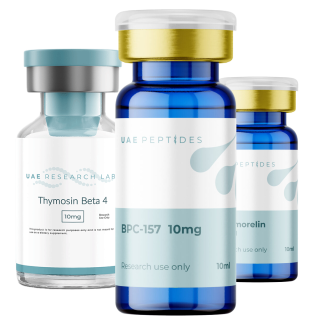
Few peptides exemplify this regulatory saga better than BPC-157. Derived from a protective protein your stomach naturally produces, BPC-157 has garnered massive attention for wound healing and tissue repair properties documented in extensive research.
Joe Rogan himself is a vocal BPC-157 advocate. “I had tendonitis in my elbow, I started using BPC-157 and it was gone in two weeks,” Rogan told his audience, contributing to mainstream awareness of this compound.
Despite anecdotal reports from thousands of users and substantial animal research supporting regenerative properties, BPC-157’s Category 2 classification cut off legal access, forcing people toward questionable sources.
Thymosin Alpha-1 demonstrates well-characterized immune-modulating properties researched across various health applications. Its restrictions particularly frustrated practitioners working with patients seeking immune system support, a need that became even more apparent during recent years as it is known as the “best friend” in the peptide community for its impact on the immune system.
These growth hormone secretagogues stimulate your body’s natural GH release and have become established tools in protocols targeting body composition, recovery, and age-related hormonal decline. Ipamorelin research shows it provides selective GH stimulation without affecting cortisol or prolactin.
Their sudden restrictions forced complete protocol restructuring for practitioners and individuals mid-journey.
With extensive research supporting both skin applications (collagen synthesis, wrinkle reduction) and wound healing potential, GHK-Cu’s restriction surprised many given its relatively long history of use and favourable safety profile across multiple studies.
It’s crucial to understand what this regulatory shift accomplishes, and equally important, what it doesn’t, so you can set realistic expectations.
At UAE Peptides, we are committed to providing the highest quality peptides and services for you which is why our standards hit every one of these parameters and more.
FDA approval in the drug sense. These peptides haven’t completed extensive Phase I, II, and III clinical trials required for conventional FDA drug approval.
Category 1 simply means compounding pharmacies can legally use these substances, similar to thousands of other compounds where compounding provides access to medications unavailable as commercial products.
The distinction matters for setting expectations. These remain compounded medications with less comprehensive clinical trial data than FDA-approved drugs, but they’re moving from completely prohibited to legally accessible through proper medical channels.
Kennedy suggested formal FDA action could occur “within a couple of weeks” of the February 27 podcast, though the exact timeline depends on formal agency processes.
Some movement has already begun. In September 2024, five peptides (CJC-1295, Ipamorelin, Thymosin Alpha-1, AOD-9604, and Selank) were removed from Category 2 and sent to advisory committee review, the first procedural step toward potential Category 1 status.
However, Kennedy’s podcast comments do not constitute formal regulatory action. Actual implementation requires:
Monitor official FDA communications rather than assuming immediate changes based solely on podcast discussions. Weeks to months represents a realistic timeframe.
The quality landscape remains absolutely critical.
Not all suppliers maintain equal standards, and the peptide space has historically attracted both exceptional providers and questionable operators.
At UAE Peptides, these are our standards:
✓ Third-party tested with independent laboratory verification of purity and identity.
✓ USA manufactured in facilities maintaining stringent quality controls.
✓ Full documentation including Certificates of Analysis available upon request.
✓Fast and reliable delivery.
✓ Expert support team providing guidance on handling, storage, and proper use.
✓ Peptide Therapy specialists ready to design your tailored, individualized protocol.
Kennedy’s announcement arrives amid explosive mainstream peptide interest.
The success of GLP-1 agonists like semaglutide (Ozempic, Wegovy) for weight loss introduced millions to peptide-based therapeutics, sparking curiosity about what other peptides might offer.
Industry observers predict peptides could become the biggest consumer wellness category of 2026, with applications spanning:
This mainstream momentum combined with regulatory shifts favoring increased access positions Peptide Therapy at a genuine inflection point, transitioning from biohacking circles to broader wellness adoption.
The potential return of these 14 peptides to legal status represents exciting news for the peptide community. However, here’s what matters most: you don’t need to wait to begin your Peptide Therapy journey.
Many highly effective peptides remain legally available and have never faced restrictions.
Whether your goals involve recovery, anti-aging, metabolic health, or overall wellness optimization, peptide options exist right now.
At UAE Peptides, we’re committed to more than just providing access to compounds. We recognise that peptides represent sophisticated biological tools requiring informed guidance for optimal, safe deployment.
Browse our selection of high-quality, USA-manufactured peptides with complete documentation and third-party testing.
Our Peptide Therapy experts design personalised, tailored protocols aligned with your specific goals.
Browse our peptide selection or schedule your 1:1 consultation
Yes, when sourced from reputable suppliers and used with proper guidance, peptides demonstrate highly favourable safety profiles. Many have been studied extensively, BPC-157 alone has 544 research articles examining its safety and mechanisms. Peptides are naturally occurring biological molecules – short amino acid chains your body already recognizes and uses for essential functions. The key to safety lies in quality sourcing (third-party tested, USA manufactured) and working with knowledgeable practitioners who can assess your specific situation and monitor your progress.
No. Kennedy’s podcast statement represents policy intentions and direction, not formal regulatory action. Monitor official FDA communications for confirmed changes.
Kennedy didn’t name all 14 during his Rogan interview. However, strong candidates include BPC-157, Thymosin Alpha-1, CJC-1295, Ipamorelin, and GHK-Cu based on their established user bases and the fact that five peptides (CJC-1295, Ipamorelin, Thymosin Alpha-1, AOD-9604, and Selank) were already sent for advisory committee review in September 2024. Official confirmation will come through formal FDA announcements.
Absolutely not! Many highly effective peptides remain legally available and never faced restrictions. UAE Peptides offers comprehensive, high-quality peptides available now – USA manufactured with rigorous third-party testing and complete documentation. Whether you’re interested in recovery, anti-aging, metabolic health, or wellness optimization, effective peptide options exist today. Browse our selection or book your consultation to get started.
Written by Elizabeth Sogeke, BSc Genetics, MPH
Elizabeth is a science and medical writer with a background in Genetics and Public Health. She holds a BSc in Genetics and a Master’s in Public Health (MPH), with a focus on mitochondrial science, metabolic health, and healthy aging. Over the past several years, she has worked with leading peptide research laboratories and functional medicine clinics, creating trusted, clinically-informed content that bridges the latest developments in peptide and longevity research with real-world applications.
Discount Applied Successfully!
Your savings have been added to the cart.

20% OFF sitewide across
UAE Peptides for a limited time
Use the promocode: SITEWIDE20