
Watching your reflection change over the years, skin losing its bounce, fine lines deepening into creases, hair thinning where it once grew thick, can feel like witnessing an irreversible decline.
For decades, the anti-aging industry has offered temporary fixes: creams that plump briefly, treatments that mask rather than mend, procedures that tighten superficially without addressing the underlying cellular breakdown.
However, aging skin and hair loss is not necessarily completely inevitable destinations but rather reflect specific biological deficits that can be directly addressed.
What if your body already knows how to rebuild collagen, stimulate follicles, and repair tissue, and simply needs the right molecular signals to reactivate these dormant programs?
Peptides are short sequences of amino acids functioning as biological instructions that tell cells what to build, what to repair, and what to regenerate.
Unlike conventional anti-aging treatments that work superficially or temporarily, certain peptides trigger genuine cellular reconstruction, stimulating authentic collagen production, enhancing blood flow to starved follicles, modulating thousands of aging-related genes, and fundamentally restoring tissue function rather than merely disguising its decline.
The science document measurable tissue rebuilding: skin becoming demonstrably thicker and firmer, wrinkles reducing in both depth and volume, hair follicles increasing in density and diameter.
These findings represent actual structural changes visible under microscopic examination and quantifiable through imaging.
The parallel decline of skin quality and hair health is not coincidental, both tissues share fundamental biological requirements that deteriorate together with age.
Consider collagen, the structural protein comprising roughly 70% of your skin’s dry weight and forming essential scaffolding around every hair follicle.
After age 30, collagen synthesis drops approximately 1% annually whilst breakdown accelerates, a double assault that progressively weakens both dermal structure (creating sagging and wrinkles) and follicular support systems (contributing to hair thinning and premature shedding).
Vascular supply represents another shared vulnerability.
Your skin contains extensive networks of tiny blood vessels delivering oxygen and nutrients to constantly renewing cells.
Hair follicles demand even more robust circulation, during active growth phases, the rapid cell division producing each strand requires extraordinary metabolic support.
As microvascular density declines with age, both tissues suffer: skin becomes thinner and less resilient whilst follicles struggle to maintain adequate growth phases.
Growth factors provide the third critical link.
Insulin-like growth factor-1 (IGF-1), for instance, simultaneously influences dermal collagen synthesis and hair follicle cycling.
When IGF-1 levels decline (as they inevitably do with aging or growth hormone reduction), both skin structure and hair growth deteriorate in tandem.
Similarly, inflammatory molecules that accelerate skin aging trigger premature follicle regression and miniaturization.
This biological interconnection explains why effective peptide interventions frequently benefit both systems simultaneously and why comprehensive anti-aging approaches require addressing multiple pathways rather than targeting isolated symptoms.
Among anti-aging peptides, glycyl-L-histidyl-L-lysine copper complex (GHK-Cu) stands uniquely positioned as perhaps the single most comprehensively beneficial compound for combined skin rejuvenation and hair restoration.
This naturally occurring tripeptide circulates in human blood at concentrations averaging 200 nanograms per milliliter during youth but plummeting to approximately 80 ng/mL by age 60 – a decline mirroring the visible timeline of aging in both skin and hair.
This correlation sparked decades of investigation into whether restoring GHK-Cu availability could reverse age-related changes.
The clinical evidence proving GHK-Cu’s skin benefits extends across multiple rigorous trials.
A comparative study evaluated GHK-Cu against vitamin C and tretinoin (retinoic acid) – both established anti-aging ingredients.
After just one month of topical application, 70% of women receiving GHK-Cu demonstrated measurably increased collagen production, compared to 50% with vitamin C and 40% with tretinoin.
GHK-Cu’s mechanisms transcend simple collagen stimulation.
Research documented reveals that GHK-Cu modulates over 4,000 human genes, essentially reprogramming aged cells toward more youthful expression patterns.
The peptide simultaneously activates genes governing tissue repair and regeneration whilst suppressing those driving inflammation and breakdown.
This genome-wide reset explains GHK-Cu’s extraordinarily broad-ranging effects compared to ingredients targeting isolated pathways.
A randomized, double-blind trial examining GHK-Cu encapsulated in advanced nano-lipid carriers documented remarkable results after merely 8 weeks of facial application:
Extended trials reveal even more dramatic transformations.
A 12-week study involving 71 women with sun-damaged (photoaged) skin measured significant increases in both skin density and thickness using ultrasound imaging, alongside improvements in firmness, clarity, and substantial reductions in fine lines and wrinkle depth.
Recent cutting-edge research employing high-resolution dermal ultrasound a state-of-the-art imaging technology visualizing near-microscopic skin elements, demonstrated an average 28% increase in collagen density after 3 months of GHK-Cu application, with the top-performing quarter of participants achieving 51% collagen increases.
These results represent measurable structural rebuilding visible through medical imaging.
The copper component proves essential for these effects, functioning as a cofactor for lysyl oxidase and lysyl hydroxylase, enzymes that cross-link collagen molecules, transforming newly synthesized collagen into strong, organized networks providing genuine structural.
GHK-Cu’s hair benefits emerge through complementary pathways addressing multiple factors limiting follicular function.
The peptide promotes formation of new blood vessels (angiogenesis) around follicles, ensuring adequate nutrient delivery to support the high metabolic demands characterizing active growth phases.
It enhances activity of dermal papilla fibroblasts, the specialized cells at each follicle’s base governing growth characteristics through secretion of regulatory factors.
Most significantly, GHK-Cu inhibits transforming growth factor-beta (TGF-β), a cytokine powerfully associated with follicular miniaturization in androgenetic (pattern) hair loss.
By suppressing TGF-β activity, GHK-Cu helps prevent the progressive follicle shrinkage that transforms thick terminal hairs into fine, barely visible vellus hairs.
Clinical trials validate these mechanisms. Topical GHK-Cu application has produced significant hair density improvements in androgenetic alopecia patients over 12-week periods, with outcomes attributed to direct follicular stimulation meaning the peptide acts locally on scalp tissue without disrupting broader hormonal balance.
Body Protective Compound-157 (BPC-157), a 15-amino-acid sequence derived from protective proteins naturally present in human gastric secretions, has established its reputation primarily through exceptional wound healing capabilities.
Whilst less extensively studied for cosmetic anti-aging than GHK-Cu, emerging research illuminates meaningful relevance for both everyday skin maintenance and potentially hair follicle recovery in specific scenarios.
Animal research published examining severe chemical burn wounds found that BPC-157 treatment dramatically accelerated wound closure, significantly enhanced formation of granulation tissue (the new connective tissue filling wounds), and promoted superior reepithelialization (regeneration of the protective outer skin layer) compared to untreated controls.
Microscopic tissue analysis using specialized collagen staining revealed substantially higher collagen deposition in BPC-157-treated wounds.
BPC-157’s relevance extends far beyond acute injuries.
The peptide’s fundamental mechanisms; promoting new blood vessel growth, carefully modulating inflammatory responses, and enhancing fibroblast (collagen-producing cell) activity, apply equally to the continuous micro-repair processes maintaining healthy skin throughout normal aging.
BPC-157 operates primarily through two interconnected biological pathways.
First, it upregulates vascular endothelial growth factor (VEGF) expression in tissues, triggering formation of new capillary networks that improve oxygen and nutrient delivery whilst removing metabolic waste products more efficiently.
Second, it modulates inflammatory signaling to preserve appropriate healing responses whilst preventing the excessive or chronic inflammation that creates compounding damage and impedes regeneration.
Comprehensive reviews document BPC-157’s effectiveness across remarkably diverse wound types including surgical incisions, thermal burn injuries, and diabetic ulcers, scenarios where healing characteristically proceeds slowly or incompletely.
The peptide’s demonstrated capacity to reduce inflammatory cell infiltration, decrease tissue swelling, enhance new blood vessel formation, improve tissue coverage, and increase mechanical strength of healing tissue suggests broad applicability extending beyond obvious traumatic wounds.
While direct research specifically examining BPC-157 for primary hair loss remains limited, BPC-157’s documented mechanisms create plausible rationale for relevance in particular scenarios.
Hair follicles continuously cycle through growth (anagen), regression (catagen), and resting (telogen) phases.
Inflammatory processes, whether stemming from autoimmune conditions, mechanical trauma, chronic irritation, or infection, can prematurely force follicles out of growth phases and prolong resting periods, resulting in increased shedding and overall density reduction.
BPC-157’s anti-inflammatory properties combined with its capacity to enhance local blood circulation may help establish scalp microenvironments more favorable for sustained growth phases.
This could prove especially valuable following hair transplantation procedures (where minimizing inflammation and maximizing blood supply to newly transplanted follicles determines survival rates) or in conditions like scarring alopecia where active inflammation directly damages follicular structures.
TB-500, a synthetic version of thymosin beta-4 (among the most abundant proteins inside virtually all human cells except red blood cells), functions through mechanisms distinct from both GHK-Cu and BPC-157, yet produces complementary benefits valuable for both skin regeneration and potentially hair applications.
Research documents impressive healing acceleration with thymosin beta-4 treatment.
Wounds receiving the peptide demonstrated 42% faster closure at four days post-injury and up to 61% faster closure at seven days compared to untreated controls.
Beyond mere speed, treated wounds exhibited 11% greater contraction by day seven alongside markedly increased collagen deposition and new blood vessel formation throughout healing tissue.
What truly distinguishes TB-500, however, involves its effect on tissue architecture and organization.
When researchers microscopically examined healed wounds, they discovered that thymosin beta-4-treated tissue displayed well-organized collagen fibers exhibiting characteristics typical of mature, mechanically strong connective tissue.
Untreated wounds, conversely, showed the randomly arranged, chaotically oriented fibers characteristic of immature scar tissue.
This organizational distinction carries profound practical significance.
Properly organized mature collagen provides dramatically superior tensile strength (resistance to tearing and mechanical stress) and yields more aesthetically pleasing healing outcomes with reduced visible scarring.
For aging skin applications specifically, TB-500’s demonstrated capacity to promote organized collagen maturation, not merely increased collagen quantity, directly addresses a fundamental problem in aged tissue: the progressive replacement of strong, well-organized collagen networks with weak, disorganized fibers that fail to provide adequate structural support.
TB-500 achieves these effects through regulation of actin, a protein absolutely essential for cellular movement, shape maintenance, and function.
By modulating actin polymerization (the assembly of individual actin molecules into functional filament structures), TB-500 enhances how rapidly cells can migrate into damaged areas, how effectively they organize during tissue reconstruction processes, and how well they perform specialized functions including collagen synthesis and matrix organization.
TB-500’s demonstrated value extends to particularly challenging scenarios where healing characteristically stalls or fails.
Clinical research examining phase 2 trials in venous stasis ulcers (chronic wounds developing from poor leg circulation) and pressure ulcers (bedsores from sustained pressure) found that thymosin beta-4 accelerated complete healing by almost one month in patients achieving closure – remarkable outcomes given these represent conditions where conventional standard treatments frequently prove entirely ineffective.
For skin aging applications beyond wound repair, TB-500’s documented effects on collagen maturation, reduced excessive scar formation, and enhanced tissue flexibility suggest potential for supporting the ongoing tissue remodeling processes that maintain youthful skin appearance but decline dramatically with advancing age.
TB-500’s capacity to promote stem cell mobilization and differentiation whilst simultaneously inhibiting excessive inflammatory responses may facilitate continued dermal renewal even as endogenous regenerative capacity wanes.
While GHK-Cu, BPC-157, and TB-500 function through relatively direct tissue-level mechanisms, certain peptides influence skin and hair through an entirely different approach: modulating growth hormone (GH) secretion and its primary downstream mediator, insulin-like growth factor-1 (IGF-1).
CJC-1295 (a synthetic analogue of growth hormone-releasing hormone engineered for extended duration) and Ipamorelin (a ghrelin receptor agonist triggering pulsatile GH release) both elevate circulating GH concentrations, subsequently increasing IGF-1 production throughout the body.
IGF-1 exerts well-characterized effects on both dermal and follicular tissues.
For skin specifically, IGF-1 stimulates fibroblast proliferation and collagen synthesis, supporting the skin thickness and structural integrity that inexorably decline as GH and IGF-1 concentrations drop with age or hormonal dysfunction.
For hair, IGF-1 influences follicle cycling by activating specific signaling pathways (PI3K/Akt and MAPK/ERK) that prolong anagen (active growth) phases whilst simultaneously inhibiting the programmed cell death cascades triggering premature transitions into regression phases.
IGF-1 additionally enhances vascularization through upregulation of VEGF expression, benefiting both skin microcirculation and hair follicle blood supply.
While direct clinical trials specifically examining CJC-1295 or Ipamorelin for primary skin or hair endpoints remain relatively sparse, studies employing direct GH therapy have consistently documented improvements in skin thickness, firmness, and hair quality as secondary observations.
Research notes that patients with clinically documented GH deficiency frequently present with both skin thinning and accelerated hair loss, changes that improve following GH replacement therapy, confirming that GH/IGF-1 availability meaningfully influences both tissue systems.
The advantage secretagogues offer over direct GH administration involves preserving more physiological secretory patterns.
CJC-1295’s extended pharmacokinetic profile creates sustained elevation, whilst Ipamorelin generates brief pulses, together mimicking natural GH secretion rhythms more closely than constant exogenous hormone supplementation.
The mechanistically distinct pathways through which different peptides operate suggest that thoughtfully designed combinations may yield superior outcomes compared to single-peptide protocols.
Combining GHK-Cu’s direct collagen stimulation and genome-wide reprogramming effects with TB-500’s tissue organization enhancement and cellular migration support addresses skin aging through multiple complementary angles simultaneously.
Adding BPC-157 introduces enhanced angiogenesis and inflammatory modulation, creating comprehensive multi-pathway support for tissue remodeling and regeneration.
For individuals experiencing age-related GH decline (a near-universal phenomenon after age 30), pairing topical GHK-Cu application with systemic CJC-1295/Ipamorelin administration addresses skin health through both direct local tissue-level actions and systemic hormonal support, potentially yielding genuinely synergistic rather than merely additive benefits.
Pairing topical GHK-Cu (supporting the local follicular microenvironment through direct blood vessel formation and TGF-β inhibition) with systemic CJC-1295/Ipamorelin (elevating circulating IGF-1 to influence follicle phase cycling and duration) creates complementary support addressing both localized tissue factors and broader hormonal influences governing hair growth.
For scenarios involving significant scalp inflammation or compromised healing capacity, such as following hair transplantation procedures or in inflammatory alopecia conditions, combining BPC-157 and TB-500 leverages their complementary anti-inflammatory and tissue repair mechanisms to optimize recovery environments and minimize follicular damage.
Certain peptides demonstrate robust relevance across both skin and hair domains, offering practical implementation advantages:
GHK-Cu stands foremost among dual-application compounds, with extensive clinical evidence supporting both dermal collagen synthesis and hair follicle stimulation through overlapping biological mechanisms. A single well-designed GHK-Cu protocol can simultaneously target skin aging and hair thinning without requiring separate interventions.
CJC-1295/Ipamorelin combinations operate systemically through IGF-1 elevation, influencing both skin structural protein synthesis and hair follicle growth phase regulation through unified hormonal pathways, again offering comprehensive benefits through singular implementation.
Even BPC-157, though less extensively studied for cosmetic applications specifically, demonstrates wound healing and vascularization effects applicable to both dermal injury repair scenarios and potentially follicular recovery contexts.
The scientific foundation supporting specific peptides for genuine cellular regeneration extends beyond theoretical mechanisms to include compelling clinical evidence: trials documenting measurable tissue rebuilding, mechanistic research revealing precise cellular pathways, and even genetic analyses demonstrating how certain peptides fundamentally reset gene expression toward more youthful patterns.
Unlike treatments offering temporary cosmetic effects that disappear upon discontinuation, properly implemented peptides like GHK-Cu, BPC-157, TB-500, and growth hormone secretagogues trigger authentic cellular regeneration, rebuilding collagen networks that had deteriorated, restoring vascular supply that had diminished, and reactivating growth signalling that had declined with age.
For those considering Peptide Therapy as a comprehensive anti-aging strategy addressing both skin quality and hair health, collaborating with knowledgeable practitioners ensures protocols are properly designed, administration routes optimized for bioavailability, realistic timeframes established based on biological constraints, and outcomes appropriately monitored through objective assessment methods.
Schedule your consultation today
The answer lies in recognizing that skin and hair share fundamental biological requirements that deteriorate together during aging. Both tissues depend heavily on collagen for structural integrity (in skin’s dermal matrix and in the follicular dermal papilla), both require robust vascular networks delivering nutrients and removing waste, and both respond to similar growth factors and inflammatory signals. GHK-Cu’s mechanisms, stimulating collagen synthesis, promoting blood vessel formation, and suppressing inflammatory factors like TGF-β, directly address these shared biological requirements. Additionally, GHK-Cu influences over 4,000 genes involved in tissue repair and regeneration, creating comprehensive effects across multiple tissue types rather than narrow targeting of isolated pathways. This genomic breadth explains why implementing a single well-designed GHK-Cu protocol can simultaneously reduce visible wrinkles whilst improving measurable hair density.
While both peptides accelerate healing, they accomplish this through entirely different cellular mechanisms that complement rather than duplicate each other. BPC-157 functions primarily by promoting new blood vessel formation through VEGF upregulation and by carefully modulating inflammatory signaling pathways creating healing environments with superior nutrient delivery and controlled inflammatory responses that support rather than impede repair. TB-500, conversely, works by regulating actin (the protein controlling cellular movement and organization), which enhances how rapidly cells can physically migrate into damaged areas and how effectively they organize during tissue reconstruction. Notably, TB-500 particularly excels at promoting well-organized, mature collagen formation exhibiting proper fiber alignment and cross-linking, whilst BPC-157 demonstrates especially strong effects on vascular support and inflammatory control. When thoughtfully combined in protocols, they address complementary aspects of the healing process for potentially superior overall outcomes compared to either alone.
The effects are scientifically valid but operate indirectly through hormonal pathways rather than through direct tissue contact. CJC-1295 and Ipamorelin don’t physically touch your skin or scalp instead, they work systemically by elevating growth hormone levels, which subsequently triggers increased production of IGF-1 (insulin-like growth factor-1) throughout your body. IGF-1 then influences skin fibroblasts to produce more collagen and affects hair follicles to remain in their active growth phases longer whilst resisting premature regression. This isn’t speculative studies examining people with clinically documented growth hormone deficiency consistently show they develop characteristic skin thinning and accelerated hair loss that measurably improve when growth hormone status is restored through replacement therapy. The critical distinction is that topical products cannot replicate these systemic hormonal effects regardless of formulation sophistication, which explains why injectable peptides modulating growth hormone pathways offer benefits fundamentally different from what topical treatments can provide.
This requires genuine patience because your body regenerates these tissues slowly through biological processes that cannot be artificially accelerated beyond physiological limits. For skin firmness improvements and wrinkle reduction, expect absolute minimum timeframes of 8-12 weeks before visible changes become apparent to you or others. This timeline directly reflects how long your body requires to synthesize substantial quantities of new collagen, strengthen it through enzymatic cross-linking, and integrate it into existing tissue architecture. Clinical trials employing GHK-Cu typically demonstrate measurable skin improvements around the 12-week threshold with consistent daily application. Hair changes demand even longer patience, usually 3-6 months minimum, sometimes extending to a full year for maximal results. This extended timeline exists because hair follicles must complete their natural growth cycles before you can observe changes. If a follicle currently sits in its resting phase (lasting approximately 3 months), it must finish that phase before transitioning to growth, regardless of what peptides you’re using or how perfectly you’re applying them. Discontinuing treatment at 4-6 weeks because dramatic changes haven’t yet appeared means you’re abandoning the protocol before the underlying biological processes have had adequate time to complete and manifest visibly.
Peptides tend to produce the most impressive outcomes when their documented mechanisms directly address the specific underlying pathology driving visible changes. For skin applications, the most robust clinical evidence exists for photoaging (sun damage), age-related collagen depletion, wound healing following procedures like laser treatments or surgical interventions, and conditions characterized by impaired healing capacity. GHK-Cu demonstrates particularly strong evidence specifically for sun-damaged and chronologically aged skin. BPC-157 and TB-500 show exceptional performance in scenarios involving actual tissue wounds or significant damage requiring substantial repair. For hair applications, peptides may prove most beneficial when root causes involve poor scalp blood flow, active inflammatory processes, or reduced growth factor signalling, such as certain presentations of pattern hair loss where follicles are progressively miniaturizing but remain viable. However, if your hair loss stems purely from excess androgen hormones without other contributing factors (like poor circulation or inflammation), peptides that don’t directly address hormonal drivers may provide more limited benefit compared to scenarios where multiple pathophysiological factors contribute to follicular dysfunction.
The strategic key involves combining peptides operating through genuinely different mechanisms rather than selecting peptides with substantially overlapping or redundant pathways. For example, pairing topical GHK-Cu (acting directly on skin and scalp tissues through local mechanisms) with injectable CJC-1295/Ipamorelin (working systemically through growth hormone and IGF-1 pathways) addresses aging from both localized tissue-level and whole-body systemic angles, creating complementary support more valuable than using multiple peptides that essentially accomplish similar things through similar pathways. A prudent implementation approach involves starting with a single carefully selected peptide to understand how your individual biology responds, then gradually introducing additional peptides based on observed results and remaining goals. Topical and injectable peptides can be deployed simultaneously without route conflicts since they work through entirely different delivery mechanisms and tissue penetration pathways. When combining peptides thoughtfully based on mechanistic differences, you may discover that lower doses of each individual peptide remain effective due to synergistic interactions, though closely monitoring your responses helps identify any unexpected reactions or excessive effects requiring protocol adjustments.
Peptides like GHK-Cu benefit from decades of documented safe use history in cosmetic applications without significant concerning effects emerging across thousands of users, though individual sensitivity to copper should be assessed before beginning protocols. BPC-157 and TB-500 demonstrate favorable safety profiles in wound healing contexts based on available research, but truly long-term cosmetic use extending years rather than months lacks extensive human data establishing safety across diverse populations and extended durations, responsible use acknowledges this data limitation. Growth hormone secretagogues carry theoretical considerations surrounding prolonged IGF-1 elevation given IGF-1’s proliferative effects, though clinical significance at typical protocol doses remains unclear based on current evidence. A prudent, responsible approach includes working closely with knowledgeable practitioners capable of monitoring relevant biomarkers (such as IGF-1 levels when using secretagogues), carefully considering your individual health profile and risk factors, implementing cycling protocols rather than continuous indefinite use without breaks, and periodically reassessing whether demonstrated benefits justify continued treatment. The available safety profiles appear generally favorable based on published evidence and clinical experience, but responsible implementation means explicitly acknowledging where data remains limited or incomplete and proceeding with appropriate caution, monitoring, and professional guidance rather than dismissing legitimate questions about long-term effects.
Written by Elizabeth Sogeke, BSc Genetics, MPH
Elizabeth is a science and medical writer with a background in Genetics and Public Health. She holds a BSc in Genetics and a Master’s in Public Health (MPH), with a focus on mitochondrial science, metabolic health, and healthy aging. Over the past several years, she has worked with leading peptide research laboratories and functional medicine clinics, creating trusted, clinically-informed content that bridges the latest developments in peptide and longevity research with real-world applications.
Discount Applied Successfully!
Your savings have been added to the cart.
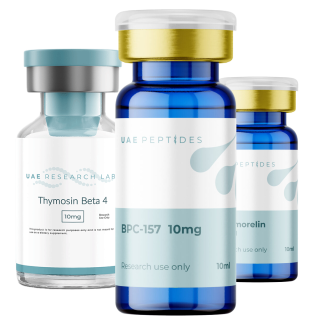

20% OFF sitewide across
UAE Peptides for a limited time
Use the promocode: SITEWIDE20